Borrowed Tableware, Kept-Back Colours: Building a Table Look from What You Have
Bring borrowed plates, linens, and personal objects into a coherent table setting by choosing a restrained palette, repeating a few details, and letting useful differences remain visible.
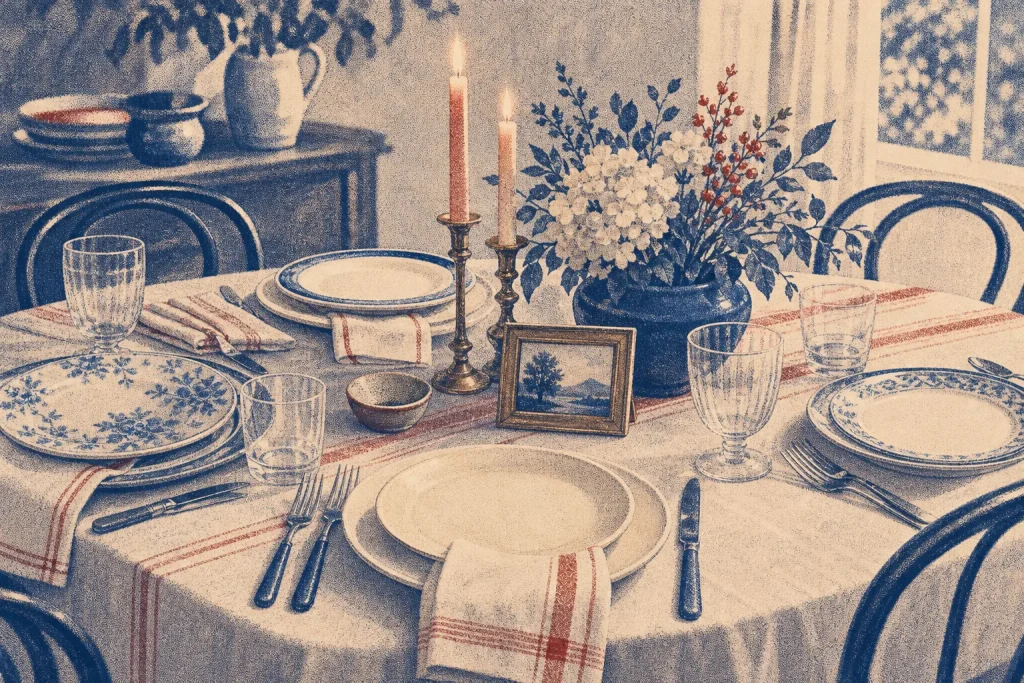
You set a stack of borrowed plates beside your own linen napkins, and the differences show at once: one rim is blue, another is cream, and the napkins have a faded red stripe. That need not be a problem to solve by buying a matching set. A table can feel considered when a small number of colors recur and the useful, personal differences have room to show.
How do I choose colors when the pieces already disagree?
Choose one quiet base color, one supporting color, and one small accent, then look for those colors across the pieces you already have. The base might be ivory, natural linen, or a warm gray. The supporting color can come from a plate rim or napkin stripe. Use the accent sparingly, perhaps in flowers, ribbon, or a few candles.
Start by laying out a sample place setting in daylight. Put a plate, napkin, glass, and any centerpiece material together rather than judging each item alone. Colors can shift beside one another: a cool white plate may make a cream tablecloth look yellow, while a blue plate rim can make a red stripe feel brighter.
Keep the palette narrow enough that the eye can recognize a pattern. This does not mean every item must match. It means a color should return often enough to feel intentional. If a borrowed platter has a strong green border, for example, you could repeat green in a few leaves rather than add several new colors to accommodate it.
What should I do with mismatched plates?
Give the plates a consistent role, such as using the same type at each place setting, or group different plates in a clear pattern. A mix can look composed when guests can see the logic behind it. Randomly switching plates from one setting to the next may feel accidental, especially if their colors and shapes vary widely.
Sort the plates by color, shape, or visual weight. Then try a simple rotation: one pale plate followed by one patterned plate, repeated around the table. If there are only a few distinctive pieces, use them at the ends of a long table or as serving pieces rather than scattering them without a plan.
Check practical details before settling on an arrangement. Make sure each plate is clean, stable on the table, and suitable for the food being served. If a plate has a delicate finish or uncertain care instructions, keep it out of a role that requires heavy use. A coherent table should still be comfortable to eat from.
How can I use linens without making the table feel busy?
Let one linen choice carry most of the visual pattern, then keep the others quieter. If the tablecloth has stripes, plain napkins can give the eye a resting place. If the cloth is plain, patterned napkins can add character without competing with the plates.
Texture can do some of the work that another color might otherwise do. A cotton runner, a hemstitched napkin, or a loosely woven cloth adds interest while staying within the palette. It is often easier to combine different textures than several bold prints, because texture changes the surface without demanding attention from across the room.
Try the linens on the actual table, not folded in a pile. A stripe may look strong when spread flat but disappear into the setting once plates and glassware cover part of it. If cloths come from different sources, make sure their lengths and edges sit comfortably together, and decide whether a visible overlap looks deliberate.
Which personal objects belong on the table?
Choose objects that have a clear place and purpose, or that can be seen without interrupting conversation. A small framed photograph, a ceramic dish for place cards, or a vase from a family shelf can make the setting feel personal. Keep objects low enough that guests can see one another across the table.
Repeat a personal object or its material in a restrained way. If you use a few brass candleholders, for instance, a brass frame or small serving spoon can echo them. Repetition works like a familiar refrain: it helps separate objects feel related, even when they were not bought as a set.
Leave room for plates, glasses, serving dishes, and hands. A table crowded with sentimental pieces can make guests cautious about moving anything. Keep fragile or valuable objects away from the busiest serving area, and avoid placing anything where a sleeve, chair, or serving utensil is likely to knock it over.
How many details should I repeat?
Repeat only a few details, and let them do more than one job. A color can recur in napkins and flowers; a material can appear in candleholders and place-card holders; a simple shape can connect a vase and serving bowl. Repetition should be easy to notice without turning the table into a themed display.
Say you have borrowed cream plates, blue-rimmed side plates, and red-striped linen napkins. You could use the cream as the base, repeat blue in small flower arrangements, and keep the red stripe limited to napkins. If a personal ceramic bowl also has a blue glaze, it can serve as the centerpiece vessel. The expected result is a table where the pieces still look distinct, but the recurring cream and blue make their differences feel related.
Before adding anything, remove one item and look again. If the table feels clearer, the object may not be earning its place. This is like arranging books on a shelf: a few recurring colors can make varied spines feel settled, while another decorative object may only interrupt the pattern.
How do I know the table is ready?
Set one complete place setting and a small centerpiece before arranging the whole table. Look at it from a seated guest’s position, then check it from the entrance to the room. The first view helps you notice comfort and sightlines; the second shows whether the palette reads as one arrangement or a collection of unrelated pieces.
Make a short list of what is already working: perhaps the plate rim repeats the flowers, or the linen texture softens a glossy serving dish. Keep those links and remove additions that introduce a color or material without a reason. Then check that guests can reach shared food, identify their seats, and set down a glass without moving decor.
A table built from borrowed things does not need to hide its history. The point is not to make every piece look newly acquired, but to give the mix enough order that guests can enjoy both its character and the meal. When the color links are clear and the objects have space, a chipped family bowl or an unusual plate can feel like part of the welcome rather than an exception.